
Introduction
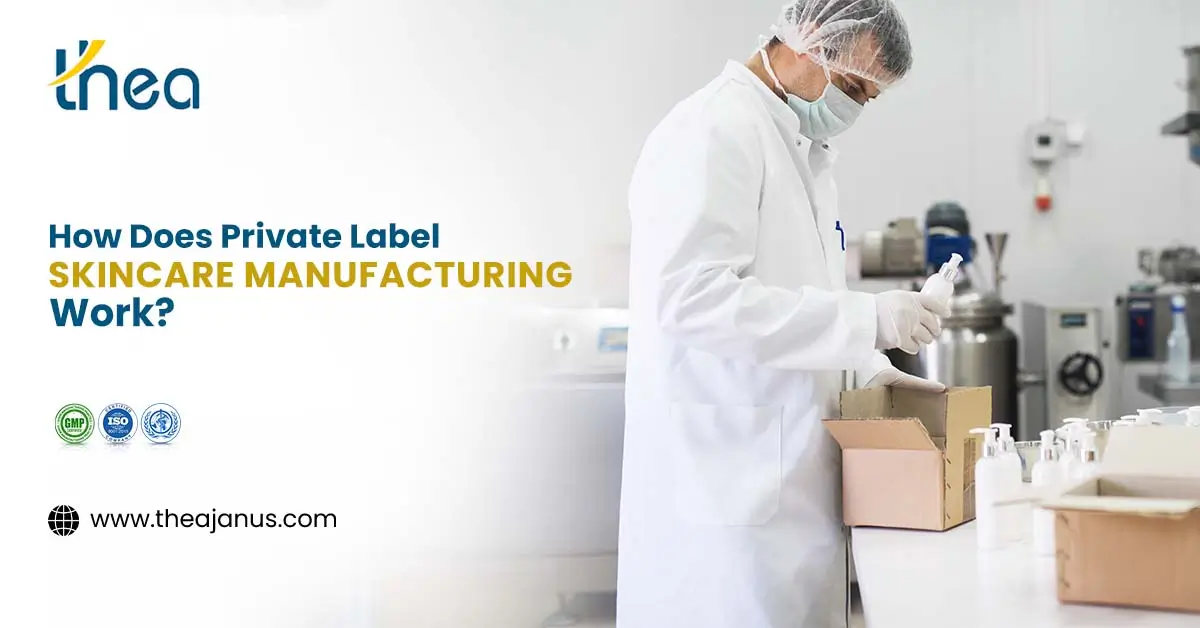
What Is Private Label Skincare Manufacturing? Private label skincare manufacturing is a business model where a private-label manufacturer of skin care products creates and produces products for another firm, which creates and produces products for another firm, who distributes the items under its own brand name. This means startups, retailers, beauty brands, salons, dermatology brands and existing firms can launch skincare products without the need to build their own production facilities. Usually, the manufacturer makes the product (chooses it, formulates it, packages it, and quality-tests it) and the brand owner brands, markets, distributes and sells it.
What is Private Label Skincare Manufacturing?
Private label skincare production is the process of manufacturing ready-made or customized skincare products for a firm that wishes to sell under its label.
Common skincare products sold under private labels are
- Face creams & moisturizers
- Facial Serums
- Face washes and cleansers
- Sunscreen
- Toners.
- Body lotions
- Gels & creams for acne
- Hair & scalp products
- Vitamin C and Niacinamide products
- Exfoliating masks and products
Hence, If the business opts for an existing formulation or requires a custom product, the actual manufacturing will vary.
How Does Private Label Skin Care Manufacturing Work?
In a Private-Label Manufacturer of Skin Care Products this working process is generally divided into a series of parts, starting with product planning and finishing with final items prepared for distribution.
1. Understand the intended purpose of the product.
First the corporation has to identify what type of skin care product it wants to promote. Companies can look at the targeted clientele, skin problems, price range, product category, and the demand in the market.
For example, a new skincare label may choose products like a vitamin C serum, moisturizer, cleanser and sunscreen to build a basic line of facial care.
2. Choose a Ready Formula or Build One Yourself
A few private label makers sell products that are already made. You can then put your name on them and sell them as your own. This often saves time and makes the start easier. If you want something specific, you can also request a special mix. You can ask for an exclusive formula that matches the ingredients, feel, scent, skin type, or other product details you need. Keep in mind that a custom formula usually takes more time since it needs extra checks and trials.
3. Get Samples and Approve the Product
After the product details are agreed on, the maker prepares samples. Then the brand owner can review how it turns out, including:
- Thickness and texture
- smell
- Look:
- Absorption coefficients
- Compatible for packaging
- The total experience of the product.
Possible adjustments may be proposed before the final formula is accepted.
4. Brand & Packaging
Once the product is approved, the business will select packaging that is consistent with the trademark. It also can contain bottles, tubes, jars, pumps, cartons, labels and other packaging parts.
The brand owner normally gives or authorizes information including:
- Trade name
- Product Title
- Label Designation
- Symbol
- Claims for products
- Package size.
- Packaging Type
Briefly, The producer then makes the product to the specified specifications and appropriate requirements.
5. Testing and Quality Check
Before anyone ships this for sale, it needs a proper test run. You also have to screen it first. These may involve tests for physical qualities, stability, microbiological quality, compatibility and other relevant aspects of the product. But, a good Private-Label Skin Care Manufacturer should have enough quality-control systems and documentation to produce consistently.
6. Manufacturing, Commercial
Once the formula, packaging and needs are finalized, the firm then gets into mass manufacturing.
The production phase may involve:
- Sources of Raw Materials
- weighing and measuring
- Mixing and processing
- Quality control tests
- Fill in Labelling:
- Packaging and Shipping
- Inspection of the finished goods
Normal production quantities are based on the manufacturer’s minimum order quantity (MOQ).
What Are the Advantages of Joining a Private-Label Manufacturer of Skin Care Products?
Using private labeling can ease the operational burden of starting a skincare brand. Companies don’t need to develop their own manufacturing facilities, engage a whole production staff, or oversee every step of formulation and manufacture in-house.
Main advantages:
- Lower infrastructure requirements: No need for a whole production plant.
- Speed up product introductions: Existing formulations save development time.
- Own brand: The goods are sold under the company’s own brand name.
- Product variety: With one manufacturing partner, companies can develop various skincare categories.
- Production skill: Manufacturers carry out technological production procedures.
- Scalability: Brands can adjust production volumes as they expand.
Customization options: invest in a well established Third-Party Skin Care Products Manufacturer in India permit their customers for the customization of formulas, aroma, texture and packaging.
Private Label versus Custom Skincare Manufacturing
Sometimes these words are used interchangeably, but sometimes there might be a big difference.
| Factor | Private Label Skincare Manufacturing | Custom Skincare Manufacturing |
|---|---|---|
| Product Formula | Pre-developed formula | Formulated according to your requirements |
| Customization | Limited customization | High level of customization |
| Development Time | Faster | Usually takes longer |
| R&D Requirement | Minimal | Requires formulation and testing |
| Initial Investment | Generally lower | Generally higher |
| MOQ | Often comparatively lower | May be higher depending on formulation |
Before placing an order, companies should verify with the manufacturer the specific details of the private label service.
What to Check Before Selecting a Private-Label Manufacturer of Skin Care Products?
Selecting the proper manufacturing partner is critical, because product quality, consistency, paperwork, packaging and delivery can have an immediate impact on the brand’s operations.
Before choosing a manufacturer, consider:
- Production Capacity and Plant
- Licenses and regulatory compliance applicable
- Quality-control procedures
- Types of skin care products available
- Formulation and customization choices
- Min. order quantity
- Purchase of raw materials
- Product testing and documentation
- Packaging:
- Production lead time and capacity
- Pricing and payment conditions
- Consistency of batches
- customer service & communication
You should also ask for product samples and product-related documentation before you commit to large-scale production.
How much does private label skin care manufacturing cost?
There is not just one price. The total changes based on several items. It depends on what the product uses and how it is made. It also depends on the exact type of product. Pack size plays a role too. Packaging matters as well. Material choice can shift the cost. If you want changes made to fit a brief, that can add to the bill. The number of units you order can change the final figure. Testing can be a factor. Labeling is another one. For instance, a common ready-made formula with standard packaging can cost less than a custom serum. A custom serum may use selected ingredients and higher-grade packaging. Lastly, get a full quote that lists charges for the product, packaging, testing, custom work, and any other relevant fees.
Who is allowed to use private label skincare manufacturing?
Invest in the Private-Label Manufacturer of Skin Care Products might be for you:
- New skincare entrepreneurs
- Beauty & Cosmetic Brands
- Dermatology-oriented companies
- Salons & Spas
- E-commerce merchants
- Retail operation
- Influencer-Driven Brands
- Health and wellness firms
Today, cosmetic companies are widening their product portfolio.
This gives you a means to establish a branded skincare portfolio without running the complete production operation yourself.
Conclusion
Private label skincare manufacturing works by allowing a business to outsource product development and manufacturing while selling the finished products under its own brand. The process generally covers product selection, formulation, sampling, packaging, testing, manufacturing, quality checks, and final delivery.
For a successful launch, businesses should look beyond pricing and evaluate the quality systems, formulation capabilities, documentation, MOQ, packaging options of a Private-Label Manufacturer of Skin Care Products. Thus, a strong manufacturing deal and clear product details can also reduce problems in production and later when you grow.
FAQs
Q1. What does private label skincare manufacturing mean?
Ans. It means a company can sell skincare under its own brand. The maker does the production work.
Q2. How does private label skincare manufacturing usually run?
Ans. Most plans include choosing the product, making or choosing the formula, making samples, handling packaging, doing quality checks, then producing and shipping.
Q3. Can I change the formula or other parts?
Ans. Yes. Many manufacturers allow changes. You can often adjust ingredients, fragrance, feel, packaging, and written product specs.
Q4. What skincare items can be privately labeled?
Ans. People often choose face creams, serums, cleansers, moisturizers, sunscreen, toners, gels, masks, and body lotions.
Q5. Does this fit new startups?
Ans. Yes. It can let a new brand sell skincare without building its own plant.
Q6. What is the MOQ for private label skincare?
Ans. MOQ changes from one maker to another. It can also depend on the formula and the packaging. Order size matters too.
Q7. How long will private label skincare take to make?
Ans. Timing depends on what you approve first. It can include formula sign off, custom work, packing, testing, and the size of your order.
Q8. What should I check before picking a Private-Label Manufacturer of Skin Care Products?
Ans. Look at what they can produce, their quality process, required licenses, their testing steps, MOQ, packing options, and how much they can handle.
Q9. Can I use my own brand name and packaging?
Ans. Private label items are made and packed so they can be sold under the buyer’s brand name, as long as they meet the rules that apply.
Q10. What is the price for private label skincare making?
Ans. The cost varies. It depends on the type of product, the ingredients, the formula, the packaging, how much can be customized, any needed testing, and the size of the order.