
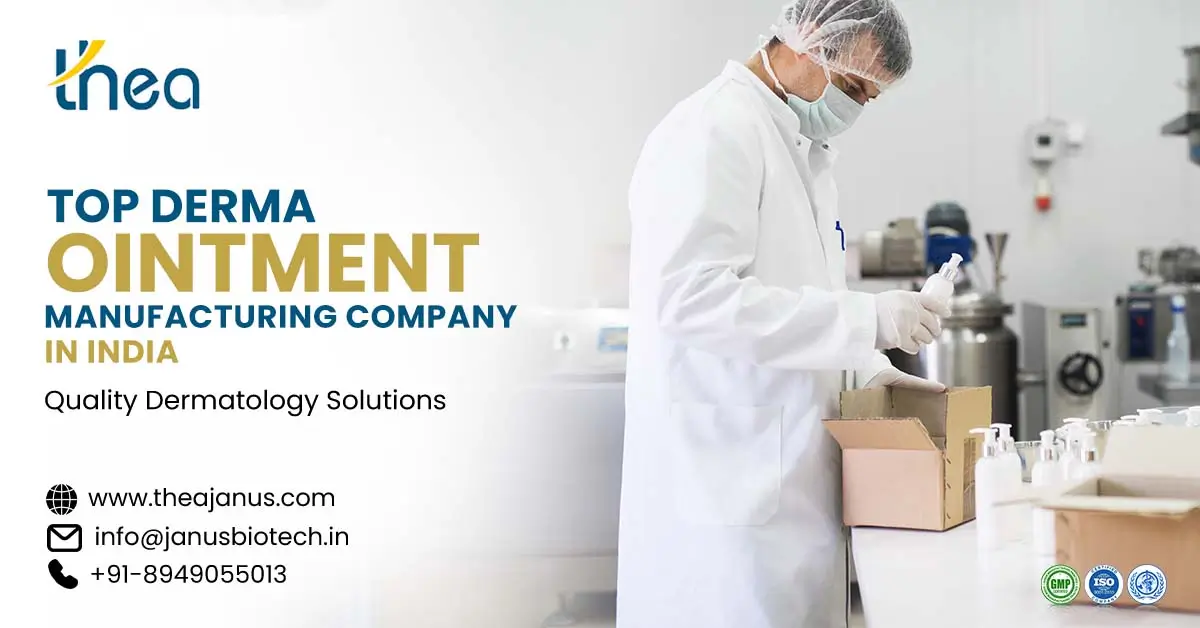
The growing prevalence of eczema, psoriasis, fungal infections, and acne has raised the demand for speciality ointments. In this growth, lifestyle factors such as pollution and stress play a huge role. These are contributing to an increase in skin-related disorders, which is driving up ointment usage. Moreover, the Indian dermatology business is rapidly growing as people become increasingly aware of the importance of their skin’s health and appearance. As a result, Cosmetic dermatology (anti-ageing, fairness, and scar removal) is driving the market for derma ointments. Furthermore, many pharmaceutical companies prefer to outsource to a trusted Derma Ointment Manufacturing Company in India rather than establishing their own production facilities. Ultimately, this lowers operational costs while allowing businesses to focus on marketing and branding.
Additionally, India is a prominent exporter of dermatological products, and third-party derma product producers meet global demand. Even with this International demand for low-cost, high-quality ointments is specifically driving production of the various types of skincare ointments. One of the most important things is that Third-party manufacturers create antifungal, antibacterial, anti-inflammatory, antiviral, moisturising, and combination ointments to address both medical and cosmetic demands. This variety specifically encourages pharmaceutical businesses to outsource and broaden their product offerings. Consequently, Third-party derma ointment production is in high demand due to factors such as rising skin problems and cosmetic needs, cost savings for pharmaceutical companies, diverse product offerings, regulatory compliance, export possibilities, and franchise growth. Hence, various factors make third-party derma ointment manufacture a valuable and rapidly expanding sector of the pharmaceutical industry.
Critical steps of the manufacturing process followed by the top Derma Ointment Manufacturing Company in India, Thea
Here’s a detailed summary of the essential phases in the making of ointments used by our expert team of manufacturers:
- Choice of Base:
Choose an ointment base that is perfect for the kind (oleaginous, absorption, emulsion, or water-soluble). Common bases include petroleum jelly, lanolin, PEG, and paraffin. Also, the base determines the drug’s release rate, stability, and skin penetration.
- Preparing the ingredients:
Active pharmaceutical ingredients (APIs) are correctly weighed, and also Excipients such as stabilisers, preservatives, antioxidants, and emulsifiers are chosen. Along with this, Solid medications are ground or micronised to achieve uniform dispersion.
- Melting the Base:
The solid components of the base are melted in a jacketed vessel or heating system. In this process, we ensure the temperature is carefully kept to prevent deterioration. Along with this, Hydrophilic and lipophilic components are produced individually as needed.
- The incorporation of medicines:
- The API is mixed into a molten or softened base. However, in this method, we use
- Fusion method (add medication when the base is melting).
- The medication is incorporated into the prepared base through trituration or mixing.
- Mixing and Homogenization:
High-shear mixers, often known as planetary mixers, ensure the equal distribution of drugs in the base. Furthermore, Homogenization aids in producing a smooth, non-gritty texture. Even with this, Air entrapment is kept to a minimum to prevent instability.
- Cooling and Setting:
The mixture is slowly cooled under controlled conditions. Moreover, continuous stirring promotes uniformity and helps to prevent phase separation.
- Milling (if required):
To create a consistent and smooth texture, ointment can be run through ointment mills or colloid mills.
Thea offers the best collection of the most demanded Derma Ointments.
As the leading Derma Ointment Manufacturer in India, we offer a huge collection of various types of ointments that have various benefits. Here’s a clear and systematic breakdown of Derma Ointments and their usage.
- Antifungal Ointments:
This includes Clotrimazole, Ketoconazole, and Terbinafine. These are useful to treat fungal infections such as candidiasis, ringworm, and athlete’s foot. Also relieves itching, redness, and scaling caused by fungus.
- Antibacterial ointments:
In this, we have added mupirocin, neomycin, and fusidic acid. These treat bacterial skin infections (impetigo and folliculitis) and can also prevent infection in minor wounds, burns, or cuts.
- Anti-inflammatory and corticosteroid ointments:
Hydrocortisone, betamethasone, and clobetasol are included in this segment that reduces inflammation, itching, and swelling. They are Effective in treating eczema, psoriasis, dermatitis, and allergic responses.
- Moisturising/Emollient Ointments:
Petroleum jelly, paraffin-based ointments, and urea ointments are important types of these ointments. These are useful to treat dry, flaky, or cracked skin and also provide a protective barrier that locks in moisture. Along with this, it is frequently used for eczema and atopic dermatitis.
- Antiviral Ointments:
Treat viral skin illnesses such as herpes simplex (cold sores and genital herpes) and also reduce itching, pain, and recovery time.
- Analgesic/local anaesthetic ointments:
Offer momentary relief from pain, burning, or itching. These types of ointments are Useful for mild burns, insect bites, and before minor dermatological operations.
- Keratolytic Ointments:
Salicylic acid ointment and coal tar ointment also help to eliminate thickened or scaly skin. These are Effective for psoriasis, warts, corns, and calluses.
Conclusion mode
In our previous blog, we have proven that Thea is the leading platform of the genuine and trusted Derma Ointment Manufacturing Company in India. Also, we follow the top-notch industry rules and regulations of manufacturing while making the derma products. Thus, you can fully trust our services and join us now.
FAQs
Q. Do Thea’s derma ointments meet GMP and WHO standards?
Ans. Yes, as a reputable and Top Derma Ointment Manufacturer, we especially adhere to WHO-GMP, ISO, and DCGI criteria to produce high-quality, safe, and effective ointments.
Q: Is it true that Thea provides third-party and contract manufacturing services?
Ans. Yes, our company offers third-party production, contract manufacturing, and also private labelling services to pharmaceutical firms, startups, and distributors.